
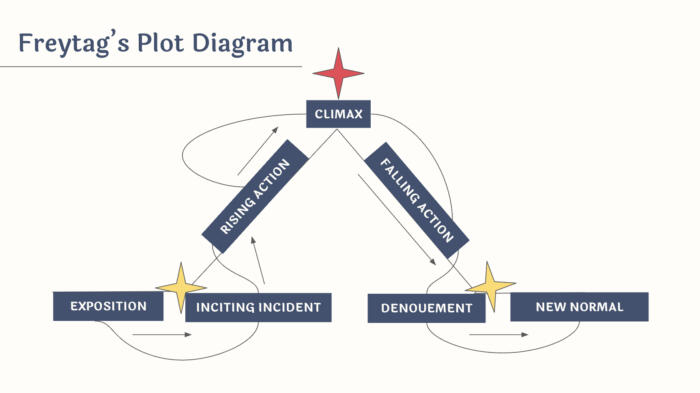
For a story to “work,” it needs to have a beginning, middle, and end. If we don’t start somewhere, we won’t be able to build momentum. If we don’t have a middle, we’ll get off to a start and we’ll arrive at the end without preparation. If we don’t have an ending, we’ll be left wondering what happened. Each of those parts – beginning, middle, ending – are part of the story structure. Another way to describe that structure is with the elements of Freytag’s Plot Diagram: Exposition, Inciting Incident, Rising Action, Climax, Falling Action, Denouement/Resolution.
Each post in the Story Structure series will focus on one of the elements of the structure. You’ll find a definition of the term, an explanation of why that element matters, some examples, and ideas to help your child to develop their skills with this element by practicing.
Series Titles
There are six parts to this series:
Story Structure: Exposition
Story Structure: Inciting Incident
Story Structure: Rising Action
Story Structure: Climax
Story Structure: Falling Action
Story Structure: Denouement/Resolution
Bottom Line
The Story Structure series will provide you with the information and examples you need to introduce your child to the plot diagram elements. The greater their skill level with these elements, the stronger they will be when writing or speaking.